Psychologists have been studying the concept of humans executing more than one job since the 1920s, although the term “multitasking” did not appear on the scene until the 1960s. It (multitasking) was first used to characterize computers rather than people. In the initial days of Computer Invention, the 10-megahertz computer was so astonishingly fast that a brand-new term was required to characterize a computer’s capacity to complete a variety of activities swiftly and simultaneously. That’s how the expression “Multitasking” became a routine.
In the early 2000s, as the internet gradually took control of our corporate culture, the pace at which routine tasks were intended to be finished, quickened. No Doubt the .com revolution has paced up the expectations of timelines for work completion, it has also transitioned our working style and culture. This has forced an emergence in newer and more efficient ways of discharging tasks. The.com revolution demonstrated the potential for everyday office tasks to be completed simultaneously by entwining or entangling them with one another. As a result, more tasks can now be finished in a set amount of time, resulting into better result-oriented productivity. Thus, multitasking gradually merged into ordinary life.

By design, multitasking was meant to make life easier and come with built-in benefits, such as the chance to be exposed to several things at once. It provides one with an opportunity to work on different things, enhancing their knowledge and skill sets, as She/He is exposed to varied business processes and operations simultaneously. It improves attention on work and helps improve thought-process, focus and concentration. Through regular multitasking, the bandwidth to switch concentration between tasks is acquired. Such flexibility of concentration boosts resilience. Given the work environment we operate in and the constant discussion about greater attention span and undivided focus, a little resilience can go a long way.
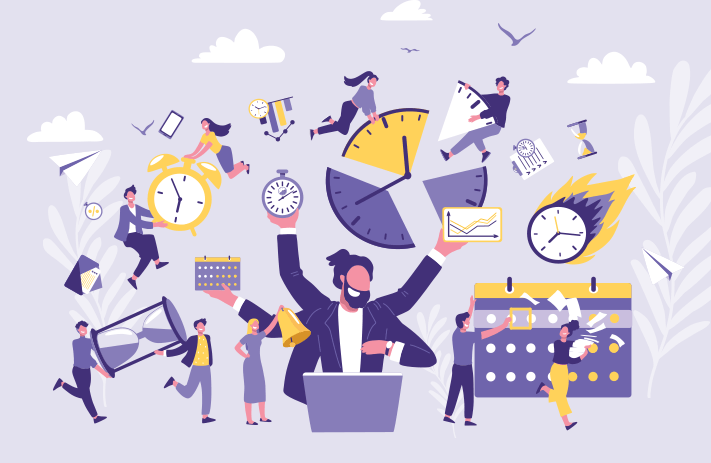
Let’s take an example, in any organization a salesperson has to perform several activities. This begins right away with prospecting for new clients and customers, managing the client base that already exists, bringing back lapsed clients, and many other sales-related operations. If She/He attempts to accomplish each task independently, the amount of time needed to finish each activity would be enormous. So, what should they do NOW? Take the necessary time to complete each activity individually or find a quick workaround to finish them all at once? Obviously, She/He will go for the latter option. This saves them with a lot of time to devote to their primary task.
Working on multiple projects simultaneously teaches your brain how to handle the intricacy of varied jobs/tasks with caution. As the individual can prioritize tasks and effectively use their time to handle several work-related operations at once, it can aid to enhanced time management and better organizational abilities. Employees feel accomplished as they can now complete multiple tasks in a short period of time. When an employee uses their expertise and experience to numerous operational encounters at once while multitasking, it can aid to improved problem-solving skill. This facilitates quicker reaction to any crisis during the task completion. Employees who are adept at managing numerous activities at once are an illustration of the benefits of multitasking in an office environment.
 blogadda
Leave a comment