Part 2: The Rise of Zero-Party Data – Why Customers Willingly Share Data
In Part 1, we saw how the end of third-party cookies is forcing brands to rethink data strategies. The big question is: what fills the gap?
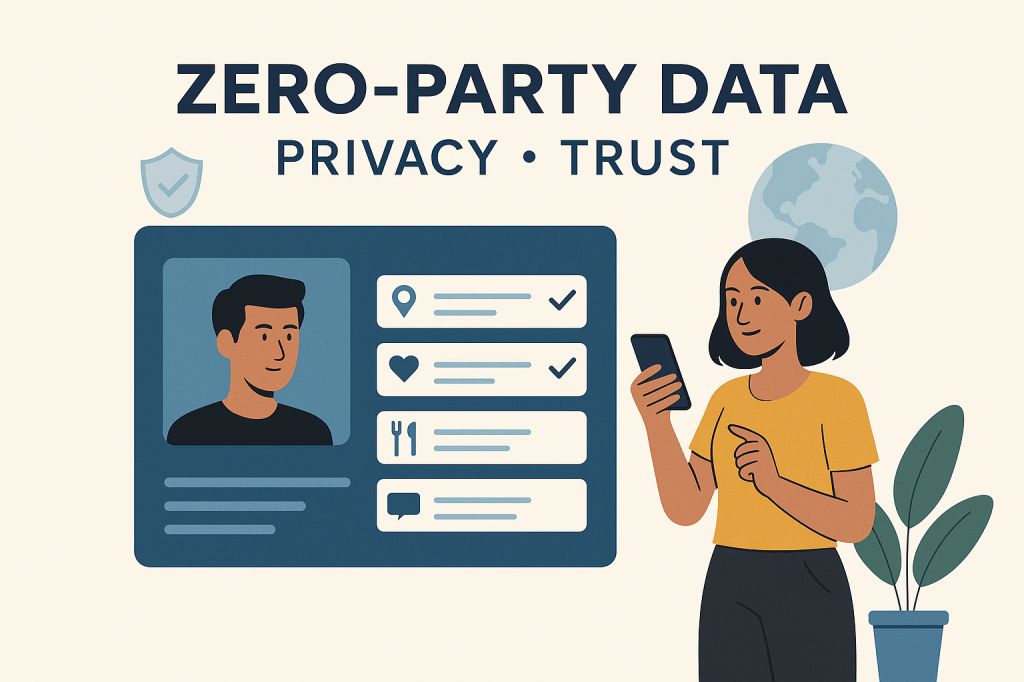
The answer is Zero-Party Data — information that customers intentionally and proactively share with you. Unlike first-party data (which is observed through behavior), zero-party data is declared:
- Preferences
- Feedback
- Intentions
- Personal context
Why Zero-Party Data Matters
- Trust & Transparency – Customers know exactly what they’re sharing.
- Hyper-Personalization – Data comes straight from the source, so recommendations feel relevant, not intrusive.
- Accuracy Over Assumptions – No guesswork. You hear it directly from the customer.
- Compliance-Friendly – Consent-driven and aligned with privacy laws like GDPR & India’s DPDP Act.
Everyday Examples
- Nykaa: Asking about skin type before recommending beauty products.
- Swiggy/Zomato: Allowing users to set cuisine preferences or spice levels.
- Policybazaar: Asking users about financial goals to offer tailored plans.
These are not just questions — they’re trust-building touchpoints that make the customer feel heard.
The Big Shift
Zero-Party Data flips the script:
Instead of brands tracking customers, it’s customers guiding brands.
And in that shift lies the key to stronger loyalty, deeper engagement, and smarter personalization.
💡 Brands that master the art of asking — not tracking — will unlock deeper loyalty and more sustainable growth.
 blogadda
Leave a comment