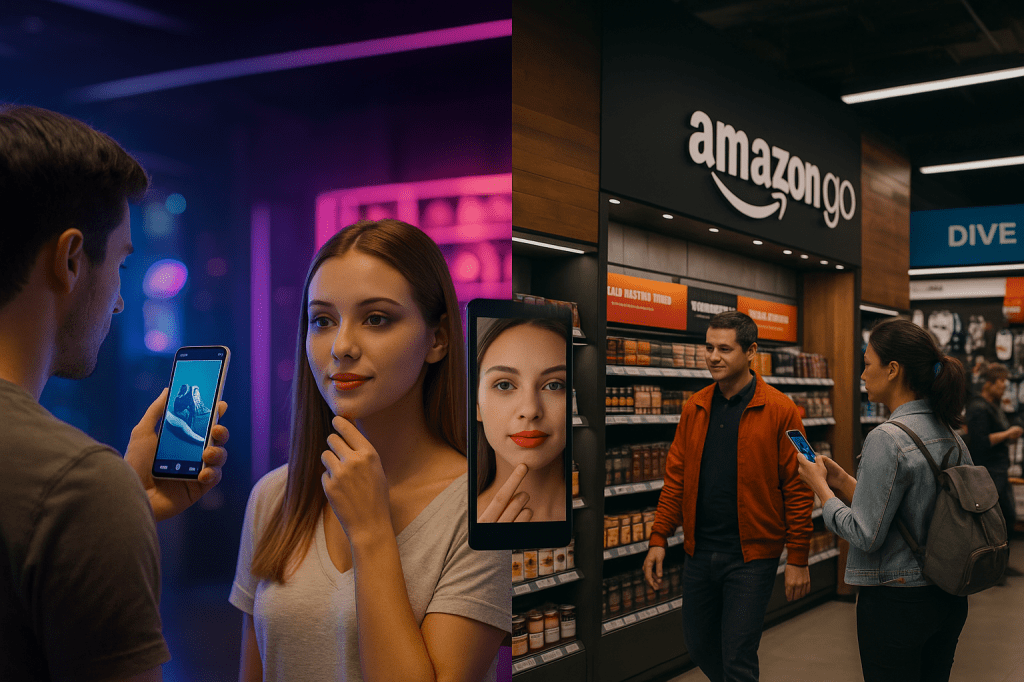
In Part 1 we saw why the world is going phygital, Part 2 explores the who—the global brands already mastering this art. From fashion to fitness, companies are proving that when technology and human touch blend, the customer experience becomes unforgettable.
Nike: Turning Shopping Into an AR Adventure
Nike isn’t just selling sneakers—they’re selling an experience. With the Nike app, customers can scan shoes in-store to see detailed AR overlays, reviews, and styling tips. The journey starts on your phone and ends with you walking out in your perfect fit.
Lesson: Phygital isn’t about more screens, it’s about making decisions easier and more fun.
Sephora: Virtual Try-On Meets Real-World Glam
Sephora’s Virtual Artist app lets you experiment with shades digitally before you even touch a product. Walk into a Sephora store after that, and you can seamlessly pick up exactly what you tested.
Lesson: Blending confidence online with trust offline builds loyalty.
Amazon Go: The Store of the Future
Imagine shopping without queues or checkouts. Amazon Go makes that real with AI, sensors, and computer vision. You grab what you want, walk out, and the app bills you automatically.
Lesson: Phygital is also about removing friction—making shopping as natural as breathing.
Decathlon: Linking Apps to Aisles
Decathlon uses its app to guide you in-store, show real-time stock, and let you scan for product information. Online reviews, in-store trials, and mobile checkout create one smooth loop.
Lesson: Phygital thrives where technology enhances, not replaces, human connection.
The Bigger Picture
From Silicon Valley to Paris to Bangalore, the message is clear: consumers don’t care about channels, they care about continuity.
Brands that lead the phygital revolution aren’t just blending tech and touch—they’re rewriting the rules of marketing.
 blogadda
Leave a comment