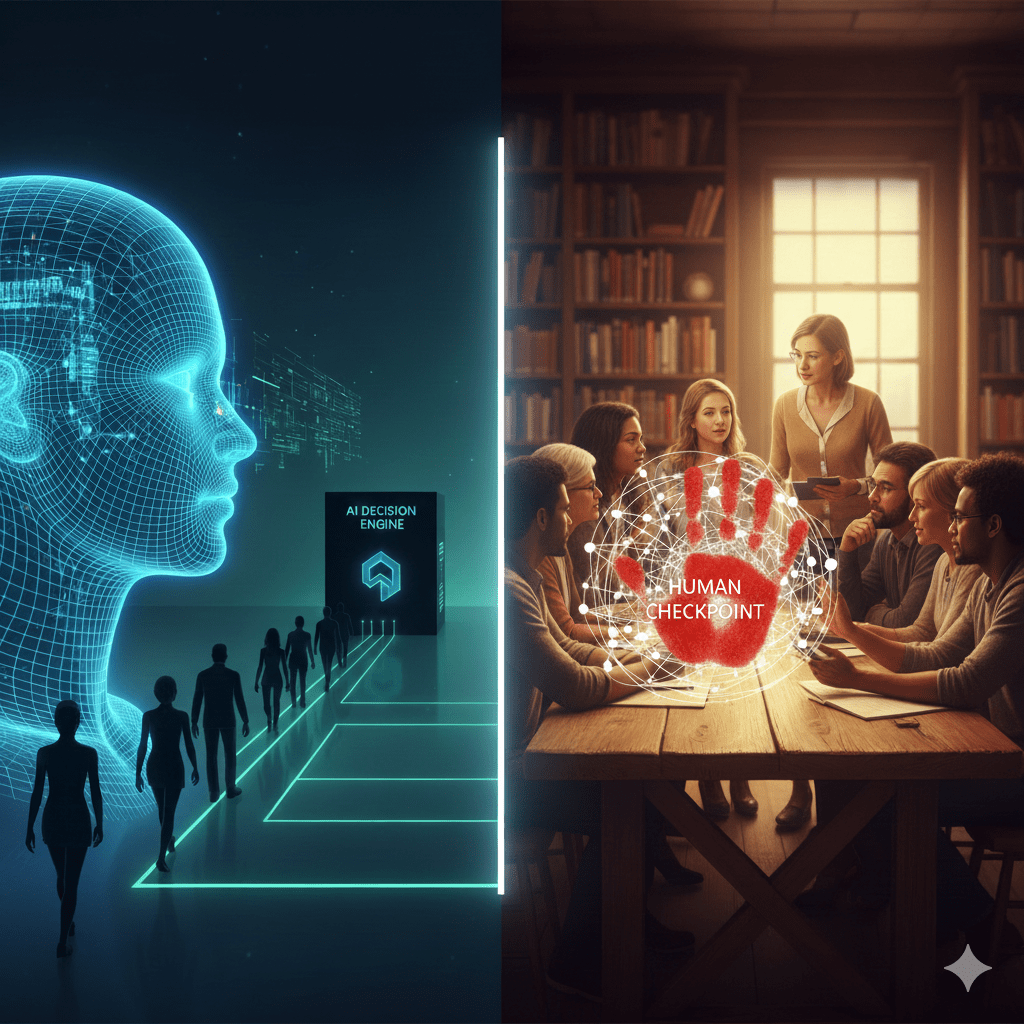
The Skill You Lose When AI Takes Over: The Atrophy of Professional Intuition
1. The Lost Art of Intuition
The core conflict of my interview failure—and the failure of the AI analysis—was the absence of Intuition.
Definition: Professional Intuition isn’t magic; it’s the instant, gut-feeling decision informed by years of pattern recognition, submerged data points, and non-verbal cues. It’s the ability to feel the market, to know when a strategy will flop before the numbers prove it, or, in an interview, to anticipate the interviewer’s unspoken hesitation.
2. The Danger Zone: Outsourcing ‘Feeling’
In Product Marketing, AI is brilliant at handling technical data: campaign performance, keyword density, and A/B testing results. But it encourages the outsourcing of the “feeling” aspect of PMM:
- Copywriting: AI drafts copy that is complete but often lacks the subtle, emotional hook that truly drives conversion.
- Strategy: AI suggests market strategies that are logical but may miss a crucial, emerging cultural trend that an intuitive human would catch.
- Hiring/Pitching: AI validates the technical points but misses the necessary rapport and chemistry—the exact thing that cost me the PMM job.
When we lean on AI to make the ‘final call,’ we stop engaging the neural pathways responsible for building and honing our professional intuition. This is how the skill atrophies: we replace complex human judgment with quick algorithmic validation.
3. Reclaiming the “Human Veto Right”
To reverse this atrophy, we must intentionally reintroduce a pause—a “Human Veto Right”—into our AI workflows. This is a mandated moment where, despite the algorithm’s recommendation, a human expert must pause and ask a key intuitive question:
“If this recommendation is technically perfect, why does my gut still feel uneasy?”
This forces us to re-engage our years of experience and challenge the machine’s certainty. It shifts the AI’s role from final decision-maker to expert consultant.
 blogadda
Leave a comment