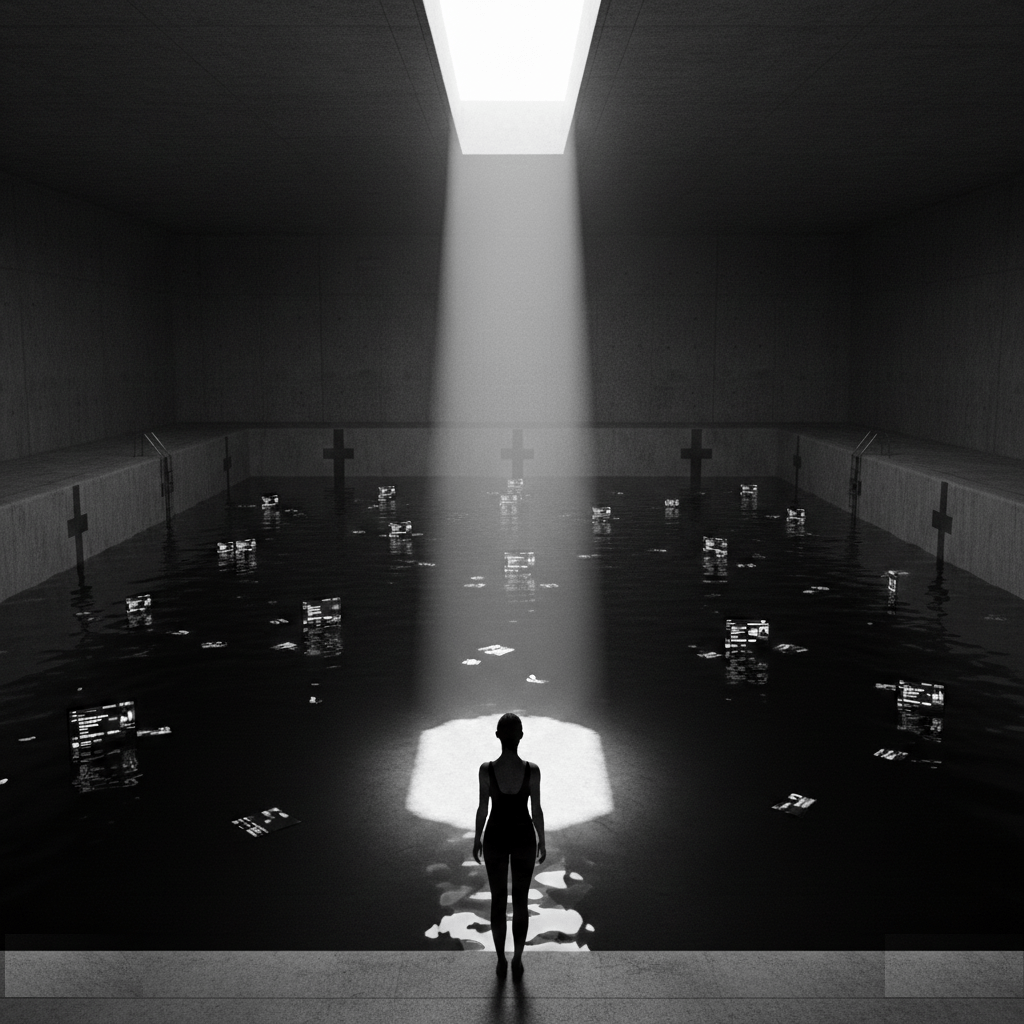
There is a direct, measurable correlation between the amount of time you spend in silence and the quality of your insights. In our current landscape, silence is a luxury we’ve traded for a constant stream of “connectedness.” But here is the reality: If you aren’t descending into deep thought, you are simply rearranging existing ideas.
When we multitask—jumping between tabs, responding to “quick” pings, and scanning headlines—we stay firmly in the “Shallow End.” This is the realm of the obvious. It’s the space where derivative thoughts live. Because the brain isn’t given the time to engage its deep-processing networks, it reaches for the nearest, most convenient answer. It relies on tropes, templates, and the kind of generic logic that a bot can replicate in seconds.
Real originality requires what I call a Cognitive Descent.
Neuroscience suggests it takes about 20 to 23 minutes of unbroken focus to reach a state of “flow.” This is where the magic happens. This is where your brain stops reacting to external stimuli and starts making unexpected connections between disparate silos of information. It’s where a concept from 18th-century philosophy suddenly provides the missing link in your 2026 data analysis.
If you interrupt that descent at minute 15 because your phone buzzed, you float right back to the surface. You never see the breakthrough. You spend your career skimming the top 10% of your potential, wondering why your work feels like a grind while others seem to produce “genius” effortlessly.
The genius isn’t in their DNA; it’s in their schedule. They have the courage to stay underwater long enough for the shallow answers to die. In an age of instant gratification, the greatest competitive advantage is the stamina to stay bored with a problem until it yields an original solution.
 blogadda
Leave a comment