-
Why 90% of Enterprise AI Projects Fail to Launch

The AI Hype Cycle vs. The Product Reality
We are awash in AI promises, but the dirty secret of the enterprise world is the vast graveyard of failed projects. Companies spend millions on data scientists, only to have their AI initiatives stall out, unable to make the leap from a laboratory proof-of-concept to a profitable product. Why? Because most AI failures aren’t technical—they are product failures.
Most AI strategies currently, are plagued by three fundamental product paradoxes:
- The Solution Seeking a Problem: Too many teams start with the shiny new model or technology (e.g., “We need to use Large Language Models!”) instead of a clear, high-value business problem. They optimize a process by 10% when the business needed a new revenue stream.
- The Data Hoarding Trap: Teams amass terabytes of data but lack a coherent, centralized data strategy. Data governance is an afterthought. As a result, 80% of data science time is spent on cleaning and wrangling, not innovating. AI dies when it’s starved of high-quality, actionable data.
- The Missing Product Owner: AI projects are often handed entirely to the data science team, who focus on model accuracy (a technical metric) instead of customer value (a product metric). This gap—the lack of a Product Manager with accountability for the business outcome—is the primary reason projects end up on the “Algorithm Cliff.”
The Product Leader’s Role Shift
To escape the cliff, the Product Manager must stop being just a feature curator and become the AI Translator. A Product Mengers’s job is to bridge the gap between technical possibility and commercial viability. This involves asking the three basic questions which the data science team often overlooks:
- Is this solution desirable to the end-user?
- Is the risk and cost of implementation viable for the business?
- Can we ethically and legally deploy this model?
-
The Future of Remote Leadership
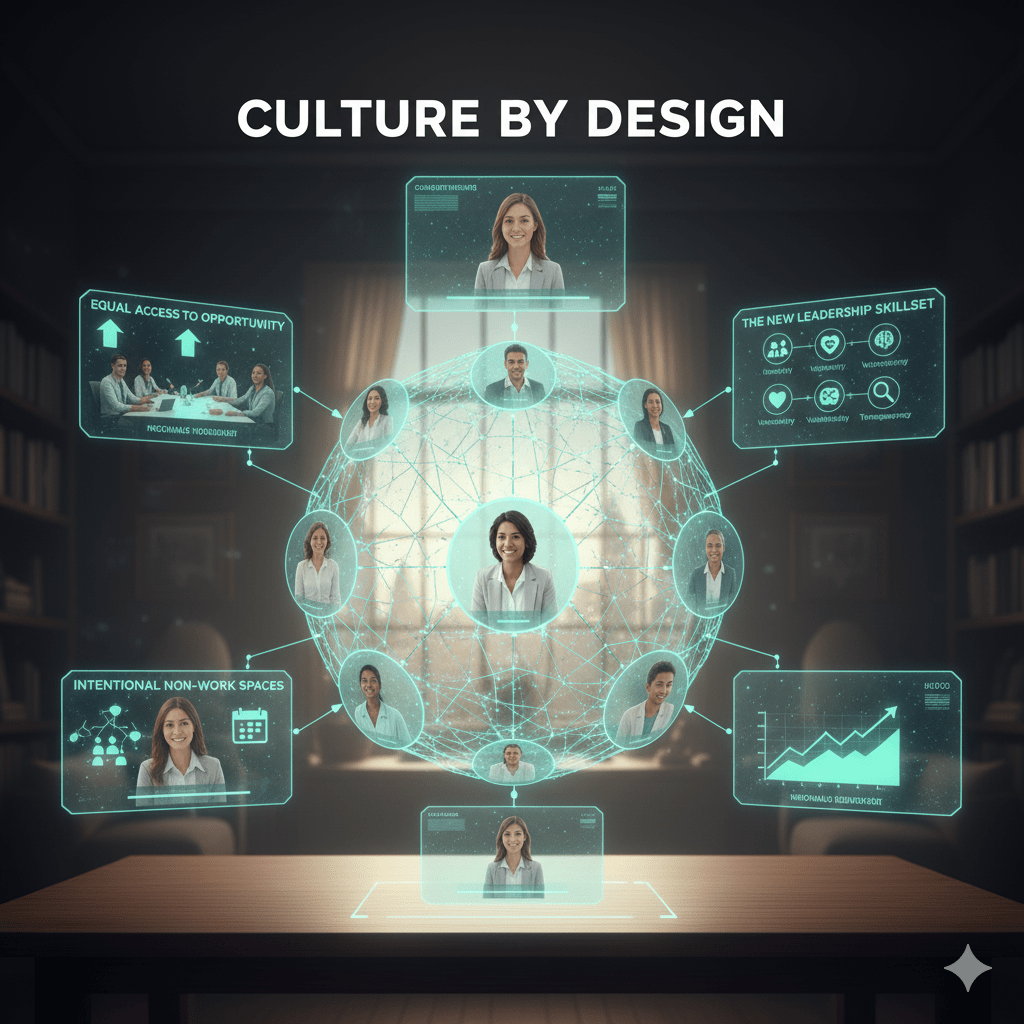
Culture by Design: Moving to a Remote-First Mindset.
Ultimately, systems only succeed if they are supported by a deliberate culture. The biggest challenge in the remote era is that culture no longer happens by osmosis; it must be engineered. Leaders must stop treating their flexible policies as a benefit and start viewing them as the foundation for the organization’s future.
The Intentional Design of Connection
Culture, in a distributed team, is the sum of shared experiences and purposeful connections.
Equal Access to Opportunity: Fight the Proximity Bias by creating formal structures for development. All-hands meetings, leadership updates, and learning and development programs must be delivered digitally and asynchronously by default. The goal is to ensure that a remote employee has the exact same access to information and upward mobility as an in-office colleague.
Intentional Non-Work Spaces: Informal interactions are critical for building emotional intelligence and vulnerability, which are key to remote success. Since water cooler chats don’t happen naturally, leaders must schedule them:
- Virtual Coworking: Open, optional video channels for focused, heads-down work.
- Dedicated Social Time: Virtual coffee breaks, pet-show-and-tells, or short, 15-minute informal chat slots before scheduled meetings. Research shows that fostering these non-work connections is vital for a sense of belonging.
The New Leadership Skillset: Emotional intelligence becomes non-negotiable. Effective remote leaders must be:
- Vulnerable: Sharing personal challenges (like a work-from-home difficulty) fosters psychological safety.
- Empathic: Recognizing the signs of digital fatigue and offering flexible accommodations.
- Transparent: Clearly communicating why decisions are made, not just what the decision is.
The Future is Outcome-Based
The leaders who will thrive in the future of work are those who stop seeking the comfort of the visible and start chasing the clarity of the measurable. They understand that trust is not given; it’s earned through clear expectations, consistent feedback, and a culture that values results above all else.
The final question for every leader is this: Does your system reward the person who works the longest, or the person who delivers the most value? The answer will determine your organization’s future performance.
-
The Future of Remote Leadership

Part 2 :- The 3 Pillars of Asynchronous Accountability
Trust is built on consistency, and consistency in a remote environment requires a new operating system based on asynchronous accountability. This means focusing on intentional design rather than instant reaction.
Here are the three core pillars and how to implement them to measure deliverables, not activity:
Pillar 1: The Clarity-First Contract
Accountability only exists where expectations are perfectly clear. This is the new “remote leadership contract.”
- Define KPIs, Not Tasks: Instead of assigning “work on the presentation,” define the Key Performance Indicator (KPI): “Finalize the Q3 Sales Deck, resulting in a 90% manager approval score by EOD Friday.”
- The Single Source of Truth: Decisions, project status, and deadlines must live in a central, accessible location (e.g., Asana, Trello, Notion). This visibility creates team accountability, as peers can see and rely on each other’s progress in real-time without needing a check-in call.
- Model Radical Transparency: As a leader, openly communicate your own schedule and deliverables. When a CEO accepts responsibility for a failed strategy and transparently outlines the fix (as seen in leadership best practices), it gives teams permission to own their mistakes and learn from them.
Pillar 2: Asynchronous by Default
Synchronous (real-time) meetings interrupt deep work and penalize colleagues in different time zones. Asynchronous (any-time) communication must become the default.
- The Communication Hierarchy: Use a clear protocol for communication:
- Urgent (Fire): Text/Direct Call (Rarely)
- Actionable (Decision/Feedback): Project Management Tool/Document Comment (The Default)
- Informational (Update/Status): Pre-recorded Video/Voice Note (Replaces most stand-ups)
- Set Response Time SLAs: Define what “responsive” means. For instance: Urgent messages get a 2-hour response; routine requests get a 24-hour response. This sets boundaries and eliminates the pressure of instant replies.
- Leverage AI for Documentation: Tools that automatically record meetings and provide searchable transcripts/action items (like Otter.ai) mean that no one is left out due to a time zone difference. Information becomes accessible 24/7.
Pillar 3: Continuous, Data-Informed Coaching
Accountability isn’t a punitive measure; it’s a feedback loop for growth. In the remote world, this coaching needs to be continuous and supported by objective data.
- Ditch the Monthly Review: Performance coaching should move from an annual event to a regular part of operations, often weekly or bi-weekly.
- Feedback based on Outcomes: Base feedback sessions on the defined KPIs in Pillar 1. Example: “Your customer satisfaction score for Project X was 95%—a huge win. Let’s discuss the 5% where the process stalled.”
- Focus on Wellness as a Metric: Leaders must address employee burnout (which only about a third of companies currently plan for). Use pulse surveys, and be the leader who models healthy boundaries by intentionally unplugging and encouraging focused “deep work” blocks.
By embedding these three pillars, leaders move beyond the uncertainty of trusting people to the certainty of trusting the system.
-
The Future of Remote Leadership.
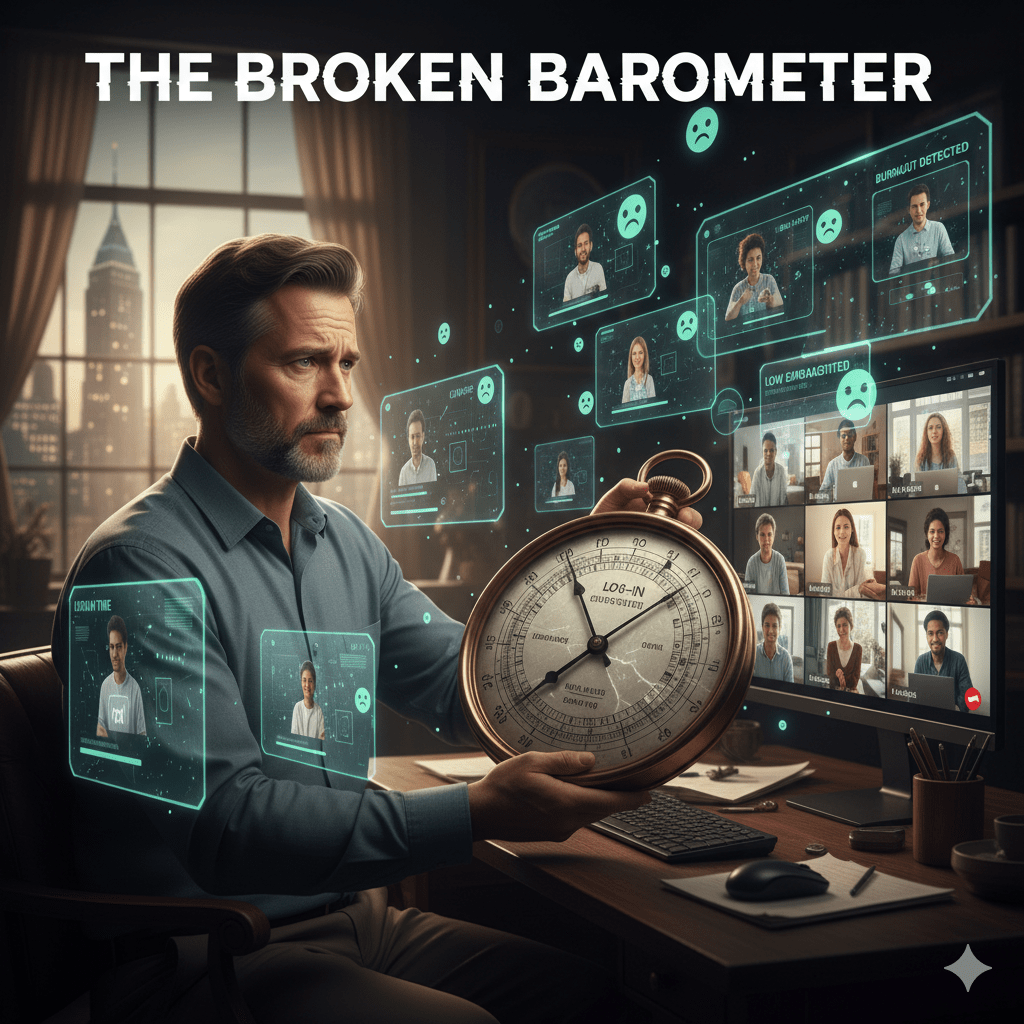
Beyond Proximity: Redefining Trust and Accountability in the Hybrid World.
The Broken Barometer: Why Traditional Trust Metrics Fail Remotely?
In the traditional office, trust was often an unspoken contract tied to proximity. The manager who could see you at your desk, the executive who walked the floor—they measured dedication using the “Barometer of Presence.” They rewarded presenteeism: long hours, quick responses, and a butt-in-seat guarantee.
In the hybrid world, this barometer is fundamentally broken. Trying to manage a distributed team by tracking log-in times or demanding constant visibility isn’t leadership; it’s “Digital Micromanagement,” and it’s the fastest way to erode the very trust you seek to build.
The Cost of the “Presence Trap”
- Trust Deficit: A recent leadership report showed that while 78% of leaders say they favor trust over tracking, a significant portion still employ tech-based monitoring tools. This gap signals to employees that their commitment is doubted, leading to resentment and lower engagement.
- Burnout and Fatigue: The push for “always-on” availability creates a perpetual work environment. Research indicates that almost half of remote workers experience burnout from over-reliance on webcams and instant messaging, blurring the lines between work and life.
- Bias in Opportunity: Unconscious bias favors the employees a leader sees most often (the “proximity bias”). Remote employees risk missing out on key projects, developmental coaching, and promotion visibility simply because they aren’t physically present.
The Mindset Shift: Trust as a Strategic Asset
The future of remote leadership demands a radical pivot: from measuring input (time spent) to valuing output (results achieved). This is the Results-Oriented Work Environment (ROWE) model, which has been shown to increase productivity by up to 40% because employees are empowered to work when they are most effective.
The new trust metric is simple: I trust you to own the outcome.
-
The Phygital Revolution: How to Build a Winning Strategy

How can your brand go phygital?
Step 1: Start with the Customer Journey
Phygital isn’t about shiny tech—it’s about solving customer pain points.
- Where are customers dropping off online?
- What do they miss in-store?
- Map the journey, then layer digital where it adds value.
Step 2: Pick the Right Tools
Not every brand needs AR headsets or cashier-less stores. Sometimes simple works best:
- QR codes for product info.
- Mobile apps for loyalty and payments.
- AR/VR for immersive shopping.
- Unified CRM to track customers across touchpoints.
Step 3: Blend Tech with Human Touch
The magic lies in balance. Too much automation can feel cold; too much “old-school” feels inconvenient.
- Use chatbots + human support together.
- Offer in-store experts guided by digital insights.
Step 4: Test, Learn, Evolve
Phygital isn’t a one-time project—it’s an ongoing loop.
- Pilot small experiments.
- Gather customer feedback.
- Scale what works.
The future of marketing isn’t about being digital-first or store-first. It’s about being customer-first.
When online and offline merge seamlessly, customers stop noticing channels—and start noticing you.
-
The Phygital Revolution: How Global Brands Are Leading the Way
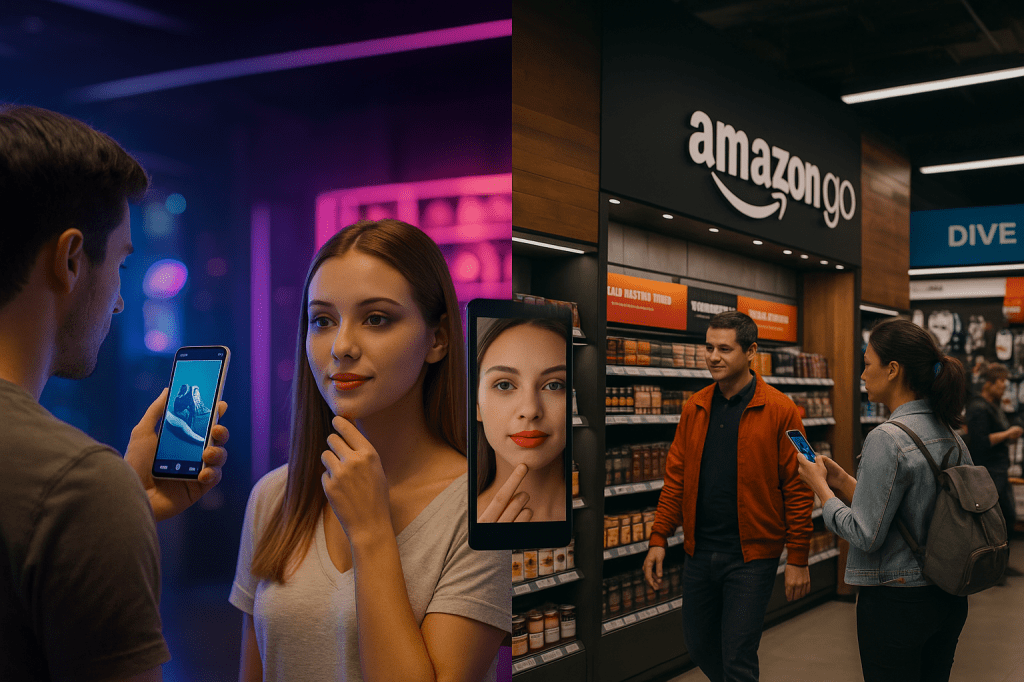
In Part 1 we saw why the world is going phygital, Part 2 explores the who—the global brands already mastering this art. From fashion to fitness, companies are proving that when technology and human touch blend, the customer experience becomes unforgettable.
Nike: Turning Shopping Into an AR Adventure
Nike isn’t just selling sneakers—they’re selling an experience. With the Nike app, customers can scan shoes in-store to see detailed AR overlays, reviews, and styling tips. The journey starts on your phone and ends with you walking out in your perfect fit.
Lesson: Phygital isn’t about more screens, it’s about making decisions easier and more fun.
Sephora: Virtual Try-On Meets Real-World Glam
Sephora’s Virtual Artist app lets you experiment with shades digitally before you even touch a product. Walk into a Sephora store after that, and you can seamlessly pick up exactly what you tested.
Lesson: Blending confidence online with trust offline builds loyalty.
Amazon Go: The Store of the Future
Imagine shopping without queues or checkouts. Amazon Go makes that real with AI, sensors, and computer vision. You grab what you want, walk out, and the app bills you automatically.
Lesson: Phygital is also about removing friction—making shopping as natural as breathing.
Decathlon: Linking Apps to Aisles
Decathlon uses its app to guide you in-store, show real-time stock, and let you scan for product information. Online reviews, in-store trials, and mobile checkout create one smooth loop.
Lesson: Phygital thrives where technology enhances, not replaces, human connection.
The Bigger Picture
From Silicon Valley to Paris to Bangalore, the message is clear: consumers don’t care about channels, they care about continuity.
Brands that lead the phygital revolution aren’t just blending tech and touch—they’re rewriting the rules of marketing.
-
The Phygital Revolution: Blending Online and Offline Marketing

There was a time when businesses had to choose between being “digital-first” or “store-first.” That era is gone. Today, consumers no longer think in channels—they think in experiences.
This is where the Phygital Revolution comes in: blending physical and digital into one seamless journey.
What Does “Phygital” Really Mean?
“Phygital” isn’t just a buzzword—it’s a mindset.
- Online: convenience, speed, personalization.
- Offline: touch, trust, human connection.
- Phygital: a unified experience where the customer moves effortlessly between both.
Why the Shift Happened
- Consumer Expectations: Customers want the ease of online + the reassurance of offline.
- Tech Integration: AR/VR, mobile apps, and QR codes have dissolved the barrier.
- Global Examples:
- Apple Stores: Order online, pick up in-store, get live demos.
- Starbucks App: Pre-order digitally, collect at your local café.
- Zara: Try in-store, checkout online—or vice versa.
The global trend is clear: brands that don’t merge both worlds risk being forgotten.
The New Consumer Reality
- They discover you online.
- They validate you offline.
- They remain loyal because you connect across both.
As one analyst put it:
“The future of marketing isn’t digital or physical. It’s phygital.”
-
Zero-Party Data & Privacy-First Marketing
Part 3: Building Trust in a Privacy-First World

The shift from third-party cookies to zero-party data isn’t just about compliance — it’s about redefining the relationship between brands and customers.
In a world where consumers are more aware of how their data is used, trust has become the ultimate currency.
What Trust-Driven Marketing Looks Like
- Consent at the Core – Make it clear why you’re asking for data and how it benefits the customer.
- Value Exchange – Customers share when they see value. Discounts, personalized offers, or smoother experiences encourage them to opt in.
- Transparency Builds Loyalty – Show customers how their input shapes the experience. If they select “vegan” in a preference center, let them see vegan-first recommendations immediately.
Practical Steps for Marketers
- Create preference centers where customers control what they share.
- Use interactive tools like quizzes, polls, or loyalty surveys to gather zero-party data.
- Train teams to view data collection not as tracking, but as a conversation.
- Keep security tight — because one breach can destroy years of trust.
Indian Market Lens
India’s DPDP Act is reshaping how brands operate. Compliance isn’t optional — but the opportunity is massive.
- E-commerce brands can ask for style/fit preferences to personalize journeys.
- BFSI players can use customer-declared financial goals to recommend smarter products.
- Even local D2C startups can win by making asking part of their customer experience.
The future of marketing doesn’t belong to brands that know the most about customers.
It belongs to brands that customers trust the most with their data.In the privacy-first era, respect isn’t just good ethics — it’s good business.
But this is just the beginning — because as trust becomes the foundation, marketing will evolve into deeper partnerships with customers.
-
Zero-Party Data & Privacy-First Marketing
Part 2: The Rise of Zero-Party Data – Why Customers Willingly Share Data
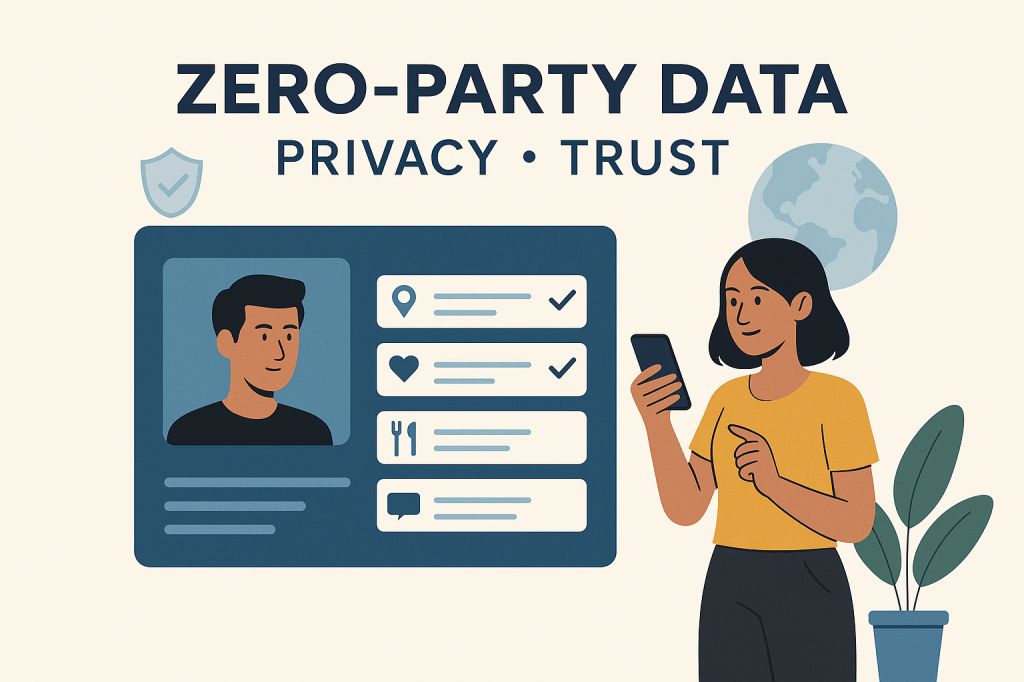
In Part 1, we saw how the end of third-party cookies is forcing brands to rethink data strategies. The big question is: what fills the gap?
The answer is Zero-Party Data — information that customers intentionally and proactively share with you. Unlike first-party data (which is observed through behavior), zero-party data is declared:
- Preferences
- Feedback
- Intentions
- Personal context
Why Zero-Party Data Matters
- Trust & Transparency – Customers know exactly what they’re sharing.
- Hyper-Personalization – Data comes straight from the source, so recommendations feel relevant, not intrusive.
- Accuracy Over Assumptions – No guesswork. You hear it directly from the customer.
- Compliance-Friendly – Consent-driven and aligned with privacy laws like GDPR & India’s DPDP Act.
Everyday Examples
- Nykaa: Asking about skin type before recommending beauty products.
- Swiggy/Zomato: Allowing users to set cuisine preferences or spice levels.
- Policybazaar: Asking users about financial goals to offer tailored plans.
These are not just questions — they’re trust-building touchpoints that make the customer feel heard.
The Big Shift
Zero-Party Data flips the script:
Instead of brands tracking customers, it’s customers guiding brands.
And in that shift lies the key to stronger loyalty, deeper engagement, and smarter personalization.💡 Brands that master the art of asking — not tracking — will unlock deeper loyalty and more sustainable growth.
-
The Death of Third-Party Cookies – What Comes Next?

For years, marketers have lived off third-party cookies — those tiny trackers that followed users around the internet, telling us what they clicked, searched, or shopped for. It was convenient, yes. But it also crossed the line of privacy far too often.
Now, with Google finally phasing out third-party cookies in Chrome and stronger privacy laws like GDPR and India’s Digital Personal Data Protection Act (DPDP Act) kicking in, marketers face a hard truth:
The old ways of tracking customers are dead.o, what comes next?
This is where First-Party and Zero-Party Data step in.
- First-Party Data is what you collect directly from your customers — like their purchase history or how they use your app.
- Zero-Party Data goes a step further: it’s data that customers voluntarily share with you — like their preferences, needs, or feedback.
Example: Think about a brand like Nykaa. Instead of secretly tracking what you browse, they ask you directly: “What’s your skin type?” or “Do you prefer vegan products?” That’s zero-party data in action — clean, consent-driven, and incredibly powerful.
The shift isn’t just about compliance. It’s about trust. Customers today want to feel in control of their data. Brands that respect that and still deliver personalized experiences will win big.
So as third-party cookies crumble, the question for marketers is simple:
Are you ready to build trust-driven strategies where customers choose to share, not where you choose to snoop?
-
Subscribe
Subscribed
Already have a WordPress.com account? Log in now.
 blogadda