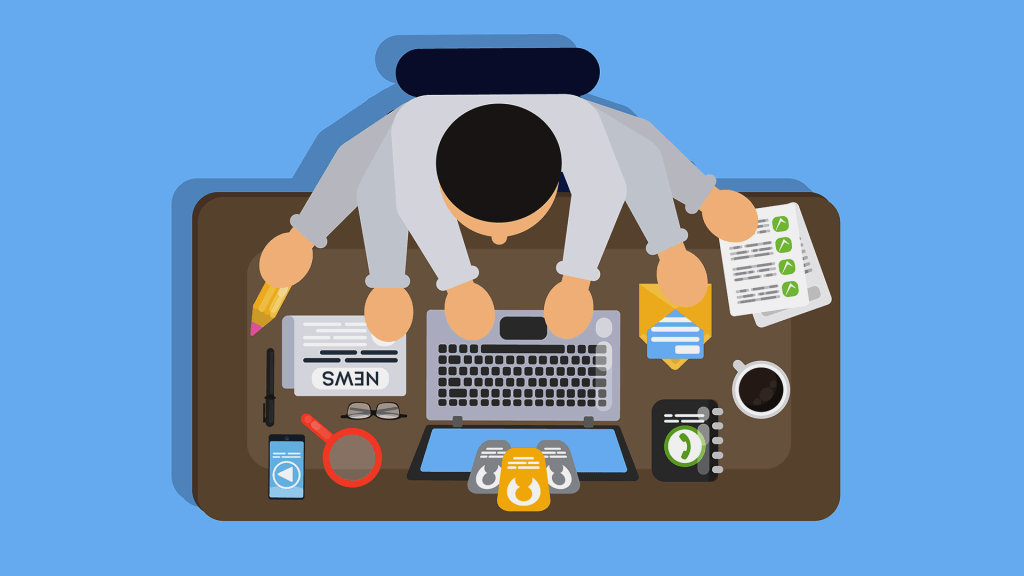
Daily, it appears that we have a mountain of tasks to complete. Would you have enough time in the day to get everything done if you typed out the list and estimated how long it would take to finish each task? Most of us will say no to it. And that is how we engage in Multitasking.
Studies show that Multitasking reduces productivity by 40%. You are trying to do two things at the same time, but you can’t because one of them is more important and you must do that first. This results in you doing the second thing wrong or missing a key aspect of it because you are focusing on the other thing. Our brain isn’t designed to do more than one task at once. With Internet revolution and penetration at an unprecedented level in almost every human life, the requirement of doing more than what a person is capable of has been intensified.
Modern-Day workplaces expect employees to do multiple things at once. It has been an integral part of corporate work life and one is expected to be an expert at it. The ability to multitask determines the chances of a successful career. It is in direct proportionate to multi-tasking. This has pushed every professional into the race of multitasking. However, what we fail to realize is that multitasking is a recipe for disaster. Corporate professionals are no longer able to focus on one task at a time but are compelled to do multiple tasks simultaneously. Many working professionals are loaded with various roles & responsibilities.
With new org structures like Matrix Org Structure, employees are expected to have multiple responsibilities at a single point in time. And this is where the real problem begins. Quality of work gets compromised for quantity. Quality suffers when resources are stretched thin across multiple tasks & projects.

Let’s take a common example of everyday office scenarios to understand the impact of multitasking on productivity and performance. Imagine a typical office environment where people are working in shifts- starting from morning till evening and vice-versa. The corporate office is busy throughout the day with meetings and discussions between management and teams working on various projects and tasks. Now, if each employee is working on five different projects and five separate tasks at a given point in time, do you think the employee will be able to deliver quality work in each of his/her tasks? Certainly not.! The more the number of tasks one has in hand the less time there is to dedicate to each one and thus the quality of work goes down.
When one has loaded with so many responsibilities and different roles the clarity with respect to primary role and responsibility starts to diminish and eventually starts fading out. Slowly one loses focus on the core job of delivering value to the company and is more occupied with juggling all the various roles and responsibilities. It becomes a chaotic situation to handle several tasks at a time without proper direction and guidance. And ultimately, this results in a drop in performance level and a loss of productivity.
To be Continued…(Part 1/3)


 blogadda
Leave a reply to Vibha Bhatia Cancel reply