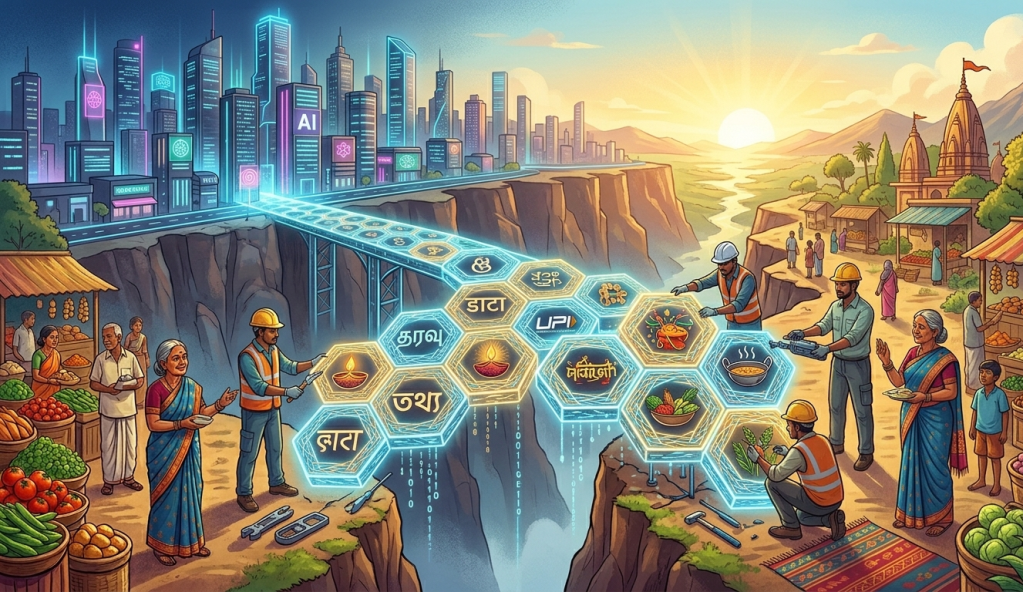
We’ve established that the “Universal AI” model is built on Western assumptions (Part 1), and we’ve mapped the structural walls—Linguistic, Cultural, and Infrastructural—that widen the Global AI Divide (Part 2).
The question now is not if the divide exists, but how the marketing industry moves forward. We can’t simply wait for the largest tech companies to “add more data” from developing economies. The solution requires a fundamental strategic pivot.
1. The Death of One-Size-Fits-All
The era of the “global rollout” is over. The “Bharat” test proves that centralization is a defect, not a feature. The winning strategy of the next decade isn’t “Scale”; it’s Contextual Intelligence.
This means shifting from large, monolithic models to smaller, specialized models. Instead of one AI trying to understand all of India, forward-thinking brands are investing in discrete AI agents that specialize in specific regional high-context environments. An AI specialist for festive purchasing behavior in Tamil Nadu will always outperform a generalist model trying to cover the entire subcontinent.
2. Investing in ‘Last Mile’ Data
To break down the walls we identified, we have to address the data scarcity. The high-value data isn’t found in translated grammar books; it’s found in the “Last Mile” of the consumer journey.
We need to incentivize the digitization and ethical collection of low-resource linguistic data—slang, dialects, and localized idioms. When AI learns how consumers actually speak (e.g., in “Hinglish”), the Trust Gap closes. The divide is bridged not by high-tech algorithms, but by investing in the human context that the algorithm is supposed to serve.
3. The Human-as-Context-Layer
We have discussed how over-automation can lead to “Professional Atrophy.” In the marketing sphere, this is where the human skillset becomes premium.
AI should no longer be viewed as the strategist; it is the processor. The marketer’s new role is to serve as the “Context Layer.” The AI handles the 24/7 data analysis, but the human must inject the nuance of “Bharat.” The strategist provides the intuition on why a cultural moment matters, and the AI executes that vision at scale.
Conclusion The Global AI Divide isn’t a technical error; it is a mirror reflecting who we built the technology for. Bridging that divide doesn’t require us to build “smarter” machines. It requires us to build more empathetic marketing structures—where technology serves local context rather than forcing context to fit the technology.
 blogadda
Leave a comment